Negotiating Across Latin America: Why One Communication Style Doesn’t Fit Every Country

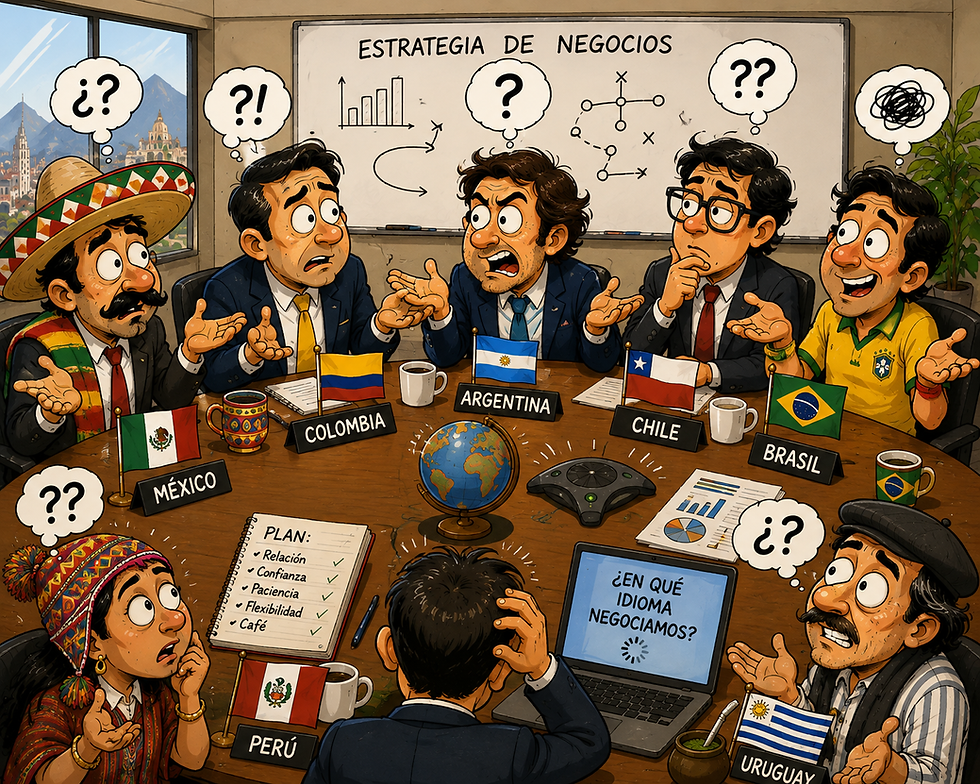
If you’ve negotiated in one Spanish-speaking country, you’ve negotiated in… one Spanish-speaking country.
One of the biggest mistakes international professionals make is assuming that Latin America is culturally uniform. After all, most countries speak Spanish, share a similar colonial history, and have many cultural similarities.
But when it comes to communication, negotiation, and business relationships, the differences can be significant.
A strategy that works well in Mexico may feel too formal in Argentina. A presentation style appreciated in Chile may seem overly direct in Colombia. Even the pace at which decisions are made can vary from country to country.
Understanding these differences won’t guarantee a successful negotiation, but it can help you avoid misunderstandings, build trust faster, and communicate more effectively.
A Shared Language Doesn’t Mean a Shared Culture
Imagine assuming that business meetings in the United States, Australia, Ireland, South Africa, and the United Kingdom are all conducted in exactly the same way simply because everyone speaks English.
Most people immediately recognize that this isn’t true.
The same applies to the Spanish-speaking world.
Each country has developed its own:
Business etiquette
Communication style
Sense of humor
Decision-making process
Professional hierarchy
Social expectations
Learning Spanish is valuable.
Learning how people communicate is even more valuable.
Mexico: Relationships Come Before Business
If you’re doing business in Mexico, don’t be surprised if the meeting begins with several minutes of conversation about topics that have nothing to do with work.
You may discuss:
Your trip
Your family
Local food
Sports
The city
Mutual acquaintances
For someone used to highly efficient meetings, this may feel like wasted time.
It isn’t.
Relationship-building is often considered an important part of doing business.
Jumping immediately into contracts and numbers can unintentionally make you appear impatient or overly transactional.
Tip
Invest time in getting to know people.
Business often moves more smoothly once personal trust has been established.
Colombia: Courtesy Is a Professional Skill
Colombians are often known for their warmth and politeness.
Professional communication frequently includes:
courteous greetings
expressions of appreciation
respectful language
indirect disagreement
Instead of saying:
“I disagree.”
Someone might say:
“Tal vez podríamos considerar otra posibilidad.”
“Perhaps we could consider another option.”
The message is the same.
The delivery is softer.
Tip
Pay attention to tone as much as words.
Being polite doesn’t mean people lack conviction.
Argentina: Direct but Passionate
Argentine communication is often energetic and expressive.
People may:
interrupt each other
debate passionately
speak with strong opinions
use humor frequently
For newcomers, conversations may sound argumentative.
Usually, they are simply animated.
Disagreement is often viewed as part of healthy discussion rather than personal conflict.
Tip
Don’t mistake enthusiasm for hostility.
Chile: Careful and Measured
Chile is often described as having a more reserved communication style.
People may avoid:
dramatic gestures
public confrontation
emotional displays
Professional meetings often proceed in an organized and thoughtful manner.
Decisions may appear cautious because people carefully evaluate details before committing.
Tip
Patience is often appreciated.
Avoid pressuring people into immediate decisions.
Peru: Respect and Professionalism
Professional communication in Peru often places significant importance on courtesy and respect, especially during first meetings.
Titles such as:
Doctor
Ingeniero
Arquitecto
Licenciado
are frequently used, even outside strictly academic settings.
Relationships matter, but professionalism and respect for hierarchy are also highly valued.
Tip
Beginning a relationship formally and becoming more relaxed over time is usually the safest approach.
Costa Rica: Collaboration Over Confrontation
Costa Rica is internationally known for its culture of “Pura Vida.”
While the phrase literally means “pure life,” it also reflects an attitude that values harmony, optimism, and cooperation.
Negotiations often emphasize finding common ground rather than creating winners and losers.
Tip
Showing flexibility often produces better results than applying pressure.
Spain: Faster Pace, Different Expectations
Although Spain is not part of Latin America, many international organizations work with both Spain and Latin American countries.
Visitors often notice that business conversations in Spain can move more quickly.
People may interrupt more frequently, speak faster, and express disagreement more directly than in many Latin American countries.
This shouldn’t automatically be interpreted as rudeness.
It’s simply a different communication style.
Silence Doesn’t Always Mean Agreement
One of the biggest mistakes foreign professionals make is assuming that silence means acceptance.
In many cultures, people avoid openly contradicting someone during a meeting.
Instead, you may hear expressions such as:
Lo vamos viendo.
We’ll keep discussing it.
Déjeme revisarlo.
Let me review it.
Es complicado.
It’s complicated.
None of these automatically mean “yes.”
Learning to recognize polite hesitation is just as important as understanding grammar.
Formality Still Matters
Many English-speaking professionals quickly switch to first names.
In much of the Spanish-speaking world, it’s usually better to begin more formally.
Examples include:
Doctor Ramírez
Ingeniera Torres
Licenciado Pérez
Embajadora Gómez
If someone later says:
Por favor, dime Ana.
“Please, call me Ana.”
then you can become more informal.
Starting respectfully is rarely a mistake.
Listening Is More Important Than Speaking
International professionals often focus on improving their Spanish vocabulary.
That’s important.
But successful negotiators usually spend more time listening than speaking.
Listen for:
pauses
indirect responses
changes in tone
hesitation
humor
what isn’t being said
Sometimes the most important message is communicated between the lines.
Practical Advice Before Your Next Meeting
Before negotiating anywhere in Latin America:
✔ Learn about the country’s communication style.
✔ Begin more formally than you think necessary.
✔ Build relationships before discussing business.
✔ Don’t confuse politeness with agreement.
✔ Avoid assuming every Spanish-speaking country communicates the same way.
✔ Be curious rather than judgmental.
✔ Adapt your style instead of expecting others to adapt to yours.
The Best Negotiators Adapt
The best international negotiators don’t simply translate their words into Spanish.
They adapt their communication style to the culture, expectations, and personalities of the people sitting across the table.
That’s what builds trust.
And in Latin America, trust often opens more doors than the perfect presentation.
Continue Learning with Spanish Millennium
Speaking Spanish is an excellent start. Knowing how to communicate across different Spanish-speaking cultures is what truly sets professionals apart.
The Spanish Millennium self-study application combines practical language training with real-world communication skills.
Inside the platform you’ll find:
Spanish for Different Professions, including specialized courses for diplomats, government officials, attorneys, healthcare professionals, educators, business leaders, and customer service teams.
AI Role-Play Conversations, where you can practice meetings, negotiations, presentations, interviews, networking events, and everyday conversations in realistic professional scenarios.
Interactive grammar, pronunciation, listening, and cultural lessons designed to help you communicate confidently throughout Spain and Latin America.
Whether you’re preparing for an international assignment, negotiating with partners abroad, or working with Spanish-speaking communities, Spanish Millennium helps you build the language and cultural skills that lead to stronger professional relationships.
Explore the self-study platform:


Comments